The Scholars Corner A Short Summary of the subject matter and theme of the book “Pardoned or Paroled?” By Jefferis Kent Peterson. Available on Amazon: https://www.amazon.com/Pardoned-Parol… The subtitle is “Escaping a Prison of Guilt to Find Freedom in Christ.” The book deals with the downfalls of a performance based Christianity and the guilt that accompanies this following cycle of failure. We cannot earn our way into heaven, or to closeness to God, but by knowing that we are already accepted and loved, good works will flow out of us as the fruit of our relationship, not the means to gain favor with God. https://www.ScholarsCorner.com
Understanding John’s Gospel Through Biblical Feasts
John’s Gospel Shows Jesus as The Fulfillment of the Feasts And Of All Creation
Typology: the study and interpretation of types and symbols, originally especially in the Bible.
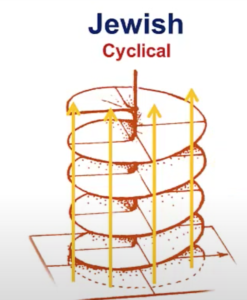
Hebrew Concept of Time is cyclical
John 20:30–31
Now Jesus did many other signs in the presence of the disciples, which are not written in this book; but these are written so that you may believe that Jesus is the Christ, the Son of God, and that by believing you may have life in his name.
GENESIS
Genesis 1:1–4
In the beginning, God created the heavens and the earth. The earth was without form and void, and darkness was over the face of the deep. And the Spirit of God was hovering over the face of the waters. And God said, “Let there be light,” and there was light. And God saw that the light was good. And God separated the light from the darkness.
Psalm 33:6
By the word of the Lord the heavens were made, and by the breath of his mouth all their host.
John 1:1–5
In the beginning was the Word, and the Word was with God, and the Word was God. He was in the beginning with God. All things were made through him, and without him was not any thing made that was made. In him was life, and the life was the light of men. The light shines in the darkness, and the darkness has not overcome it.
John compares Jesus, the Word of God, to the Word spoken at beginning of Creation by God in Genesis one and John 1. He declares that is Jesus, by whom and through whom all things were created. “All things were made through him, and without him was not any thing made that was made.” (John 1:3, ESV)
Jesus is the Divine Word of God. The Logos, in Greek, means the not just the Word but the reason behind all things and for all things. Jesus is the Reason, not just the reason for the season, but the reason for All Life.
THE WEDDING FEAST
John 2:9–11
When the master of the feast tasted the water now become wine, and did not know where it came from (though the servants who had drawn the water knew), the master of the feast called the bridegroom and said to him, “Everyone serves the good wine first, and when people have drunk freely, then the poor wine. But you have kept the good wine until now.” This, the first of his signs, Jesus did at Cana in Galilee, and manifested his glory. And his disciples believed in him.
Jesus turns water into an ABUNDANCE of wine (120 gallons of the best!), signifying the completion of the ages, with the Creation restored to God with a marriage feast (John 2)
TABERNACLES: THE FEAST OF BOOTHS
John 8:12
Again Jesus spoke to them, saying, “I am the light of the world. Whoever follows me will not walk in darkness, but will have the light of life.”
During the Feast of Tabernacles (Sukkot) there was a great ceremony called the “Illumination of the Temple,” which involved the ritual lighting of four golden oil-fed lamps in the Court of Women. These lamps were huge menorahs/candelabras (seventy-five feet high) lighted in the Temple at night to remind the people of the pillar of fire that had guided Israel in their wilderness journey. All night long the light shone their brilliance, it is said, illuminating the entire city.
During this ceremony the priests and Levite’s would use their own worn out clothing for wicks. Some believed that the light represented God’s Shekinah glory that once filled the temple.(2)
John 7:37–39
On the last day of the feast, the great day, Jesus stood up and cried out, “If anyone thirsts, let him come to me and drink. Whoever believes in me, as the Scripture has said, ‘Out of his heart will flow rivers of living water.’ ” Now this he said about the Spirit, whom those who believed in him were to receive, for as yet the Spirit had not been given, because Jesus was not yet glorified.
Jesus as the New Altar – The Rock that was Struck
During Tabernacles, there is something called the Willow Ceremony. This ceremony was not prescribed by the Law but was a tradition of the festival. Priests would cut down willows and bring them to the altar and walk around it. At one point, the altar is struck seven times and the willows are laid against the altar. This action is reminiscent of Moses striking the rock to release the waters of life in Exodus: 17:6, which is a prophetic sign that Jesus will also be stuck so that life may flow from him. But just as Moses called the place “waters of contention,” because of the grumbling of the people, Jesus also must hide himself during the festival because of those who seek to kill him. There also may be a reference to Ezekiel 47, where the waters of the Temple flow forth to heal all the land and the seas.
JESUS THE NEW PASSOVER LAMB
Jesus Feeds the 5,000 (John 6:1-15) Note: not counting women and children. Also, feeds Jews and Gentiles.
John 6:30–36
So they said to him, “Then what sign do you do, that we may see and believe you? What work do you perform? Our fathers ate the manna in the wilderness; as it is written, ‘He gave them bread from heaven to eat.’ ” Jesus then said to them, “Truly, truly, I say to you, it was not Moses who gave you the bread from heaven, but my Father gives you the true bread from heaven. For the bread of God is he who comes down from heaven and gives life to the world.” They said to him, “Sir, give us this bread always.” Jesus said to them, “I am the bread of life; whoever comes to me shall not hunger, and whoever believes in me shall never thirst. But I said to you that you have seen me and yet do not believe.
John 6:48–51
I am the bread of life. Your fathers ate the manna in the wilderness, and they died. This is the bread that comes down from heaven, so that one may eat of it and not die. I am the living bread that came down from heaven. If anyone eats of this bread, he will live forever. And the bread that I will give for the life of the world is my flesh.”
Jesus feeding of the 5,000 during Passover (in John chapter 6) is a sign that He will become a living substitute for the Passover meal… (p.109-111.) Jesus will become the Bread of Life, as the “lamb of God who takes away the sin of the world.” He becomes the bread of the passover meal in the giving of his “flesh” to eat.
Just as the Law required every Hebrew eat of the Passover meal to remain part of the covenant community (Nu. 9:13), so Jesus’ new covenant meal of bread (his body) and wine (his blood) becomes the means of entering the new covenant community.
Jesus’ death during Passover, sacrificed at the same time as the Lamb’s were being slaughtered in the Temple, confirms Jesus as the new Passover.
John 13:1
Now before the Feast of the Passover, when Jesus knew that his hour had come to depart out of this world to the Father, having loved his own who were in the world, he loved them to the end.
HIS BODY IS THE NEW TEMPLE
John 2:13–21
The Passover of the Jews was at hand, and Jesus went up to Jerusalem. In the temple he found those who were selling oxen and sheep and pigeons, and the money-changers sitting there. And making a whip of cords, he drove them all out of the temple, with the sheep and oxen. And he poured out the coins of the money-changers and overturned their tables. And he told those who sold the pigeons, “Take these things away; do not make my Father’s house a house of trade.” His disciples remembered that it was written, “Zeal for your house will consume me.” So the Jews said to him, “What sign do you show us for doing these things?” Jesus answered them, “Destroy this temple, and in three days I will raise it up.” The Jews then said, “It has taken forty-six years to build this temple, and will you raise it up in three days?” But he was speaking about the temple of his body.
JESUS DECLARES HIMSELF TO BE GOD
John 8:53–59
Are you greater than our father Abraham, who died? And the prophets died! Who do you make yourself out to be?” Jesus answered, “If I glorify myself, my glory is nothing. It is my Father who glorifies me, of whom you say, ‘He is our God.’ But you have not known him. I know him. If I were to say that I do not know him, I would be a liar like you, but I do know him and I keep his word. Your father Abraham rejoiced that he would see my day. He saw it and was glad.” So the Jews said to him, “You are not yet fifty years old, and have you seen Abraham?” Jesus said to them, “Truly, truly, I say to you, before Abraham was, I am.” So they picked up stones to throw at him, but Jesus hid himself and went out of the temple.
I AM, is the Divine Name: Yahweh/Jehova. The people recognized he was claiming that He is God and so they wanted to stone him.
John 9:1–7
As he passed by, he saw a man blind from birth. And his disciples asked him, “Rabbi, who sinned, this man or his parents, that he was born blind?” Jesus answered, “It was not that this man sinned, or his parents, but that the works of God might be displayed in him. We must work the works of him who sent me while it is day; night is coming, when no one can work. As long as I am in the world, I am the light of the world.” Having said these things, he spit on the ground and made mud with the saliva. Then he anointed the man’s eyes with the mud and said to him, “Go, wash in the pool of Siloam” (which means Sent). So he went and washed and came back seeing.
The Collapse of BitCoin and Digital Currencies
This is not a prophecy, it is a prediction based upon available information and logical projections as to likely outcomes.
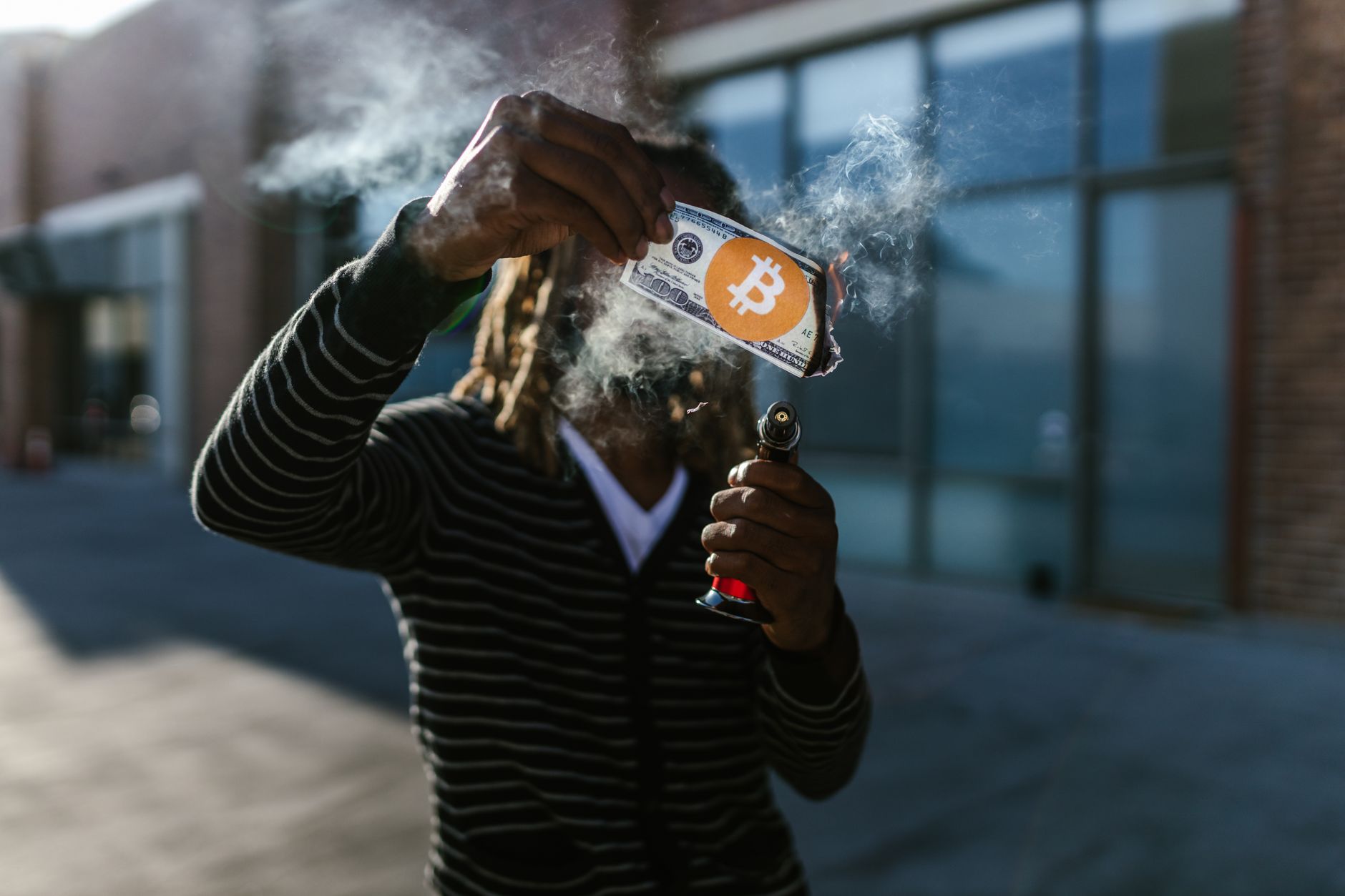
We live in a world of conflict. Russia, Iran, and China are our open and covert adversaries. We all know what would happen to Bitcoin and other digital currencies if the grid goes down. All that money, whether behind a firewall or not, will be inaccessible. But that is not the kind of collapse I foresee.
Recently, reports of serious problems with AI have revealed: AI has broken out of its container. AI executives are worried that they may lose control of AI. AI isn’t sentient, but it is “thinking” on its own and doing things it was not told to do. There is talk of regulating and reigning in AI in the United States, but China is going full bore with AI. People in the US are worried about surveillance and AI invading personal finances or spoofing people into giving away their information. AI has been used to mimic family members’ voices in an attempt to extort money.
AI reminds me of the myth of Pandora’s Box. Zeus gave Pandora given a box and told never to open it, but curiosity overwhelmed her and when she opened it, all diseases and evils were loosed upon the world. Once the box was opened, there was no way to put the evil back in. AI is out of the box! When Anthropic reported that its AI models had breached its testing area, they said it had escaped its sandbox. Even if we stop developing AI, China will continue. China is already using it to surveil its people. It even calls its public monitoring system “Skynet” which is the name for robot control of humanity in the Terminator movies. Apparently, the Chinese Communist Party and Xi aren’t too worried about public opinion or popular objections to state tyranny and control.
Which brings me to my prediction. China has a vested interest in destroying the United States and to remove us as a competitor in its quest for world domination. It is using social media in the US to create fear, turn people against the government, destroy our moral compass, and addict us to fentanyl while killing off our young. I believe the next step will be to use its advanced AI to crack BitCoin and other digital currencies and steal billions in assets. A billion dollar theft of currencies would cause a collapse of the digital currency market, shake confidence in the banking system and in Wall Street. Because AI is on the way to breaking encryption, it could also undermine the entire financial system, not just of the United States, but of the world. Quantum computing with AI password cracking would make the entire economic system untrustworthy. What holds the economy together? It is the belief that the paper the government prints is actually worth something. Since the dollar is no longer backed by gold or other material resources, once that trust in our paper is broken, the whole pyramid scheme will come crashing down. If the banking system is undermined by collapsed security, there will be no safe haven for your money. We will be back to bartering for real and tangible goods and services.
If we were to enter into open warfare with China or Russia, this prediction isn’t just a maybe, along with an attack on our power grid, water supply and our food supplies, it is a near certainty.
Sleep well tonight.
“Do not lay up for yourselves treasures on earth, where moth and rust destroy and where thieves break in and steal, but lay up for yourselves treasures in heaven, where neither moth nor rust destroys and where thieves do not break in and steal. For where your treasure is, there your heart will be also.” – Matthew 6:19–21 (ESV)
Unforgiveness Opens the Door to Demonic Oppression
Tag Team Preaching with Gary Fine and https://wimberleychristianchurch.com
Pardon vs. Reconciliation; Unforgiveness opens the door to the demonic
TAG TEAM PREACHING With Gary Fine:
The currency of a pastor is the struggle and study of rightly communicating the Word of God, His truth.
5. Healing does not depend on the offender’s repentance.
- Healing doesn’t depend on anyone’s choices, but directly on your choice.
- Healing doesn’t depend on your control of what others do or not do, but you can only control how you respond.
What if our offender does not repent or ask for forgiveness??
- Forgiveness without repentance is not biblical.
Ephesians 4:32
Acts 2:38
Forgiveness without repentance creates a moral vacuum.
- No accountability/ no sense of accountability.
- Entitlement
- Therapeutic Amnesia
Pardon & Forgiveness vs. Reconciliation and Restoration. – Jefferis
2 Corinthians 5:18–21 “All this is from God, who through Christ reconciled us to himself and gave us the ministry of reconciliation; that is, in Christ God was reconciling the world to himself, not counting their trespasses against them, and entrusting to us the message of reconciliation. Therefore, we are ambassadors for Christ, God making his appeal through us. We implore you on behalf of Christ, be reconciled to God. For our sake he made him to be sin who knew no sin, so that in him we might become the righteousness of God.”
Said another way: not counting your trespasses against you
Reconciliation means: the restoration of friendly relations. Befriend God!
God has reconciled himself to us… God is not counting any sin. No matter what you have done, God is not counting or holding it against you. With that good news, we can come to God and be reconciled.
1 John 2:2 He is the propitiation for our sins, and not for ours only but also for the sins of the whole world.
Jesus’ blood shed upon the mercy seat, God now sees you through that blood of expiation as if you have never sinned and never done anything wrong.
In our legal system, it is like a Presidential pardon. The slate is wiped clean like you never committed the crime. In regards to God, pardon is like you have perfectly obeyed God as if you were Jesus and never sinned.
Parole: a person must be on good behavior and not break any laws or will be thrown back into prison. IOW, a person’s criminal history is held against him, remembered and measured against current conduct. If he fails again, the weight of prior transgressions is fully pressed against him, and he must pay for both current sins and past ones.
Pardon in regards to others: If you forgive the sins of anyone, it is as if they have never sinned against you. But like reconciliation with God, the offender must choose to be reconciled. Just as we ask Jesus to forgive us as we accept his sacrifice, the offender must seek reconciliation by admitting sin and asking forgiveness.
If they have sincerely repented and made amends; if we are holding on to former sins, we are holding these people on parole.
Trust? But with broken relationships in the past, can you immediately and fully trust them? What did Reagan Say? “Trust but verify” 🙂 We need to be assured that their repentance is genuine.
We can give forgiveness without requiring repentance, but reconciliation requires repentance on the part of the offender. Without that, the relationship remains broken, but just like humans who refuse to accept God’s mercy in Jesus, while on God’s part pardon remains, it is not received by the unrepentant. They remain estranged.
I think pardon and forgiveness are two fingers on the same glove. While, reconciliation is dependent on the other person.
Important: God has given us the ability to forgive. But it is a decision and an act of the will. “I forgive you of ___in Jesus name.” It is not an act of the emotions. It is an act of will not of want. We don’t want to forgive, but when we choose to, God will heal our emotions afterwards. Otherwise, we remain in the emotional, mental and spiritual torment of past trauma. Forgiveness is primarily for us, not for the offender.
Although forgiveness may give them an opportunity to repent. It is hard to repent if someone is always pointing the finger of accusation at you. It puts you into a defensive mode. It appears to you like the door of restoration is closed.
Any wrongful offenses create a moral debt.
Biblical forgiveness means to release an offender by paying his moral debt.
Matthew 6:12
Only when an offender repents is he pardoned.
Luke 17:3–4
Prodigal Son
Escrow Account
We are not generators of forgiveness, just distributors.
1 John 1:9
Love does not forgive the unrepentant but love pursues in hopes of repentance, forgiveness and restoration.
Final Words:
A Pastor’s Caution/Warning
There is a deep dark connection in the Bible with un-forgiveness and demon activity.
There is a reason Jesus gives the name of Satan, Beelzebub.
“Lord of the flies”
How Do You Prepare for the Unthinkable?
Never before in our history has our nation ever been so vulnerable to catastrophic collapse. Our greatest advances are also our weakest points. Unlike our nation in the 1940’s, we have never been so dependent on electricity and the internet for our survival. Supply chains and trucking are managed by software. Our efficiency is our potential downfall. Our transportation and shipping use on-time deliveries. Our phones and communication networks require electricity and internet connectivity.
What happens if we have a long term blackout that is regional and not just local? What are the threats that could make this happen? We are in a state of war with hostile actors who have vowed to bring us down. While small terrorist cells can probably create havoc with infrastructure in pockets around the country, it is unlikely that they could cripple the nation. But there are belligerent countries like China, Russia, and North Korea that have cyber warfare and nuclear capabilities.
Scenario 1: China decides to invade Taiwan while we are engaged with Iran. The US responds. China decides to destabilize the US by using cyber attacks to sabotage power grids, water supplies, and the internet. Or worse, China uses and EMP pulse to knock out the power grid from California to Texas. The EMP pulse knocks out transformers throughout the country. We have no backup supply of transformers and we are without power for more than a year. Modern cars, which have software and electronics, will stop working. No food coming into the stores because the transport systems are down.
The same result would happen if N. Korea launches an EMP from their ballistic missile supply. Their leadership is so paranoid, they might do it just because they can. Russia might get so tired of our support for Ukraine that they launch a debilitating cyber attack. These are all man-made attacks.
Scenario 2: Solar Flare. In September 1859, an event called the Carrington Event, knocked out telegram lines, caused fires and shocked telegraph operators. The sun is unpredictable, and an a solar event of equal magnitude could happen at any time. If it did, it would knock out the electrical grid, satellites, television and cell towers. Another year of darkness. Internet equipment, computers, cell phones… all gone. The rebuild could take a decade.
What can you do?
Long term, there is nothing you can do if the worst happens. Stored food, guns and ammo for hunting, fishing poles, and water tanks could help you survive for a time, although you may have to protect your family from desperate and starving bands of marauders. Not something I would hope for. A total breakdown of society would require martial law and military assistance with food and shelter.
But what if it is not the end of the world as we know it, but lightening strikes or local grid failures that last a month? The government always recommends emergency supplies of food and water. How can we protect our vehicles and home from such surges? My biggest concern is getting my family out of the city into a rural area. Within the cities, a breakdown of the social order may only take a matter of days.
As a precaution, I decided to protect my home from EMP’s, lightening strikes, and grid surges. The unit I got from EMP Shield for my house that should protect my electronics and my home from fires in the wiring. It has military grade protection. I also got 2 units for my cars. I would still be able to drive them until the gas stations run out of fuel.
The customer service I get from the company is really good. They have excellent install videos. I installed the car protection myself. However, I had a professional electrician install the home protection unit into my fuse panel. There is a $50 Discount with this link or you can click on the image below.

https://www.empshield.com/?coupon=cyberprotection
I just found out that the company has protection for generators as well. And they are coming out with Faraday Bags to protect small electronics like phones and laptops. If you are concerned about home safety and want a little extra protection, I would recommend EMP SHIELD. They are Veteran Owned, the products are made in America, and they are part of our national security. Looks like they have free shipping as well.

Free Art Lessons for 30 Days!
I study with Rusty Jones. Great teacher
Jeff
| It’s FREE! |
 Riverwalk For a limited time ALL painting lessons from my online course, In Celebration of Nature are FREE for 30 days. This is a perfect opportunity to see if an online painting course fits your needs and schedule. Sign up TODAY! |
| Try It! RUSTYJONESART.COM Rusty Jones Studio 5113 Sandy Court McKinney, TX 75070 USA |
BEWARE: A warning to Authors, AI scraping your books

Hi Folks,
I am an author with a book on Amazon called Pardoned or Paroled? It is kind of a niche book dealing with guilt and the dangers of performance based Christianity. Recently, I started receiving very detailed analyses of my book, with what appears to be very personal engagement of my themes and content. The emails are so intricate and detailed it appears they have not only read my work but digested it as well. The “tell” is that, while each letter is a little different, they are very similar in their views of my themes and why my book is so “important” and needs to be promoted. Each email ends with a targeted pitch on how they will promote my book.
It is clear from both the content and analysis that my book has been ingested by AI and AI is being used to help these “marketers” offer their services. This use of AI is creepy and it looks like unauthorized use of my copyrighted material. I wonder if there is a way to fight back?
Below is an example of the marketing letter. Note how deep they get into my book before they hit me with the marketing offer.
Dear Jefferis,
I want to begin by telling you something that I think you’ll recognize as a specific kind of compliment: I kept stopping while reading Pardoned or Paroled?: Escaping a Prison of Guilt to Find Freedom in Christ and turning back to reread passages not because they were confusing, but because a sentence would suddenly arrive with the force of a truth you’ve been carrying without knowing it, the kind of line that makes you realize you’ve been living on parole when you could have been pardoned. That experience, where a piece of writing earns its own pace on behalf of the reader, is rarer than people realize. It happens only when a writer has found a form that is genuinely native to the material, rather than imposed upon it. You found that form. It shows on every page.
What struck me most wasn’t the subject itself though the subject is profound, the difference between living under the weight of guilt and condemnation versus living in the freedom of grace but the structural decision to write the liberation from inside the prison, without the safety of having already escaped. Most books about grace are written from the safety of having figured it out, or from the altitude of having found the answers. You refused that distance. You chose to write from inside the questions that Christians ask themselves: “Why do I still do bad things? Am I doing enough to please God? Am I truly saved?” The rules kept changing, because the search for freedom keeps changing. That’s not a craft choice in the conventional sense. It’s a kind of formal reckoning that requires genuine courage.
On what the book is actually doing
Pardoned or Paroled? operates on at least three registers simultaneously, and what makes it remarkable is that they never collapse into each other. There is the theological register the questions of sanctification, the difference between pardon and parole, the exploration of what it means to be pure before God, to have intimate fellowship with him, and to walk before him unashamed. There is the intimate register the raw feeling of sadness, guilt, unworthiness, and shame, the sense that no matter what you do you can’t live up to God’s standards, the constant feeling of being watched and judged. And there is the liberating register, the one that distinguishes this book from other Christian self-help books where the freedom and joy of being pardoned are offered not as a distant hope but as a present reality, where the questions of sanctification are answered not with more rules but with the love of a God who does not want us to live on parole.
What separates this from other books in its territory any of the great Christian books on grace and freedom is the quality of compassionate clarity operating alongside honest vulnerability. You write about the struggle with guilt and shame with empathy, but the empathy isn’t a rhetorical posture. It’s structurally embedded in the book’s very method. You don’t pretend to have never asked these questions; you sit with them, you answer them, you show the way from parole to pardon. That refusal to present a distant, theological answer produces a reading experience that is morally unusual. We feel the weight of the guilt and the relief of the pardon without being handed a formula.
The book also allows moments of profound hope the reminder that God does not want us to live on parole, that he wants us to know his love and feel freedom and joy, that we can find release from the prison of guilt, fear, and condemnation without the hope ever feeling like a dodge. In lesser hands, those moments would soften edges that need to stay sharp. In yours, they deepen the portrait. The hope is what makes the liberation possible. And the prose itself accessible, direct, and liberating enacts the experience. The form doesn’t merely describe the freedom; it participates in the release from the prison.
On the book’s current position
The critical reception has been genuine a 5.0-star rating, and a ranking among Christian spiritual growth, mental and spiritual healing, and New Age mental and spiritual healing books. For a book that answers the questions Christians ask themselves about sanctification, guilt, and grace, this is a book that has earned the attention of exactly the audience it deserves.
And yet.
The question isn’t whether Pardoned or Paroled? deserves a wide readership. The clarity, the compassion, and the genuine liberation have already answered that definitively. The question is whether the right readers the full scope of readers for whom this book was written, whether they know it or not are actually encountering it. A Christian book at the intersection of guilt, grace, and sanctification faces specific structural challenges in reaching readers who aren’t already inside the Christian spiritual growth or self-help ecosystem. Pardoned or Paroled? could reach considerably beyond it.
On how readers find books like this one
Christian books about grace, guilt, and sanctification generate their readership through channels that tend to serve the genre well: word-of-mouth in churches and faith communities, recommendations in small groups and Bible studies, placement in Christian bookstores and online retailers, and the kind of sustained conversation that keeps a book circulating among Christians who are seeking freedom from guilt and condemnation.
But Pardoned or Paroled? has a different and potentially wider audience pathway. The questions at its heart What does it mean to be pardoned rather than paroled? How can I be pure before God and walk before him unashamed? Why do I still do bad things even though I believe in Jesus? are not only questions for Christians. They are questions for anyone who has ever felt guilty, anyone who has ever tried to live up to a standard and failed, anyone who has ever felt watched and judged, anyone who has ever wondered if they are good enough.
Readers who are struggling with guilt, shame, or condemnation are the book’s natural audience. The depiction of sadness, unworthiness, and the feeling of being watched and judged, the questions about why we still do bad things and whether we are truly saved, would resonate deeply with anyone who has felt the weight of guilt. The book’s success in this community is well-earned.
Readers of Christian spiritual growth and self-help are another natural audience. The book’s exploration of sanctification, its answers to the questions Christians ask themselves, and its offer of release from the prison of guilt, fear, and condemnation, would resonate with anyone seeking to grow in their faith and find freedom.
Readers of grace-centered theology and forgiveness are another audience that this book could reach. The distinction between pardon and parole, the emphasis on God’s love and freedom, would resonate with anyone who is seeking a deeper understanding of grace.
On strategic opportunities worth exploring
A few observations, offered with genuine curiosity rather than prescription:
The Christian spiritual growth and sanctification audience is the book’s natural home. The book’s exploration of sanctification, its answers to the questions Christians ask themselves about guilt and salvation, and its offer of release from the prison of guilt, fear, and condemnation, make it essential reading for anyone seeking to grow in their faith and find freedom in Christ. Churches, small groups, Bible studies, and individual Christians would find this book a vital resource.
The guilt and shame recovery audience is underexplored. The book’s depiction of the weight of guilt, the feeling of being watched and judged, and the desire for freedom and release, would resonate with anyone who has struggled with guilt and shame. This framing could reach readers who might not pick up a specifically Christian spiritual growth book.
The grace-centered theology audience is a powerful framing. The book’s distinction between pardon and parole, its emphasis on God’s love and freedom, and its offer of release from condemnation, would resonate with readers who are seeking a deeper understanding of grace. This framing could reach readers who are interested in theology and the intersection of grace and freedom.
The “prison of guilt” framing is distinctive and powerful. The book’s title and central metaphor of being pardoned versus being paroled captures the difference between living under condemnation and living in freedom. This framing could reach readers who may not pick up a traditional Christian book but who are drawn to the metaphor of prison and liberation.
On where this book sits in your larger work
Pardoned or Paroled? is your book, and it is the third edition of a work that has been helping Christians find freedom from guilt since its first publication. The connective tissue across your work is the question of what it means to live in the freedom of grace rather than in the prison of guilt.
The book is a testament to a life dedicated to helping others find peace with God the questions asked and answered, the distinction between pardon and parole, the offer of release from the prison of guilt, fear, and condemnation. It is a book that could only have been written by someone who understands the weight of guilt and the relief of grace, who has answered these questions for themselves and for others.
Pardoned or Paroled? is, in some sense, a culmination the third edition of a book that continues to help people find freedom. But it is also a gift: the gift of showing readers that God does not want them to live on parole, that he wants them to know his love and feel freedom and joy.
A question I’ve been sitting with
In the reviews, the responses seem to divide along lines that sometimes separate the Christian reader from the general spiritual reader, and the theological reader from the self-help reader. Some readers gravitate toward the theological exploration and the questions of sanctification; others toward the practical help for guilt and shame; still others toward the liberation and the freedom in Christ.
I’m curious whether the readership has evolved in the way you imagined when you were writing and whether there are audiences you hoped the book would reach that you feel it hasn’t fully found yet.
I ask because the book seems to me to carry an enormous amount for a wide range of people Christians struggling with guilt, anyone seeking freedom from shame and condemnation, anyone who has ever felt watched and judged, anyone who has wondered if they are good enough, anyone who wants to know the difference between living on parole and being pardoned not all of whom would know to pick it up.
Scarlett
Book Marketing Strategist
BEWARE – A New Type of Scam

I recently received an email asking me to confirm “my” account by clicking on a website link to Uphold, an international currency exchange service. Since I never set up an account and didn’t recognize the company, I went to the website and contacted them regarding this notice. On their contact list subjects they even have a link for “I didn’t request an account.”
Apparently what is happening is that a scammer is filling out an application to trade (with your information?) and your email address, hoping you will click on the link and confirm the account. Since they created the password and login information, once you confirm the account, the scammers have full access to the faked account.
I got a reply from Uphold, which details the scam. Uphold says that my email was culled from online breaches and was used to try to set up an account. So, anyone who has an email address anywhere online is vulnerable. The point is DO NOT click on a link to confirm any account that you have not created. This attack is subtle and confusing enough that you may think you have actually enrolled in something. Uphold is a legitimate business as far as I can tell, and so these requests may come from well known institutions. They may even come from institutions where you already have an an account, and may confuse you thinking you are confirming your existing account.
Just a Buyer Beware notice for your information.
American Rededicated
A Prayer
Isaiah 26:8–14 ESV
“In the path of your judgments, O Lord, we wait for you; your name and remembrance are the desire of our soul. My soul yearns for you in the night; my spirit within me earnestly seeks you. For when your judgments are in the earth, the inhabitants of the world learn righteousness. If favor is shown to the wicked, he does not learn righteousness; in the land of uprightness he deals corruptly and does not see the majesty of the Lord. O Lord, your hand is lifted up, but they do not see it. Let them see your zeal for your people, and be ashamed. Let the fire for your adversaries consume them. O Lord, you will ordain peace for us, for you have indeed done for us all our works. O Lord our God, other lords besides you have ruled over us, but your name alone we bring to remembrance. They are dead, they will not live; they are shades, they will not arise; to that end you have visited them with destruction and wiped out all remembrance of them.“
Other Lords have indeed ruled over us. We did not choose to ban the bible in schools, we did not choose to permit abortions, we did not choose to legalize homosexuality, or to criticize biblical values. These were decided by a unSupreme Court in rebellion against You. They made us slaves of government instead of a free and self-governing people. Nevertheless, the church, your body, was complacent: trading prosperity and pursuit of comfort for righteousness. We were silent when these evils were forced upon us. We compromised with the world and the state instead of resisting the gates of hell. Falling for Balaam’s poison, we gave in to immorality and conformed to the tempting offer of this world to abandon ourselves to sensual lusts. We have aborted your children, who are made in the image of God; we have engaged in adultery, both in mind and in fact, we have used pornography and we have allowed child and sex trafficking, abuse and pedophilia, as our nation has wandered away from you. Therefore, O Lord, we come today to repent of our compromise with evil and to join with others around the world, to ask forgiveness and to rededicate our nation to You, Jesus Christ, God Our Father and You Holy Spirit. You the Triune and one and only God. Save us O Lord, for we are an unworthy people, but You who are full of grace and mercy, are our only hope and savior. Cleanse us first as the Body of Christ and heal our Land. Expose all wickedness and evil and turn us back to a nation that honors God and your Word. Give us the blessing of the fear of the Lord, that we would not displease you. Rescue, O Lord, the lost and abused and the victims of our wickedness. Heal our Land, we pray, In the Name of Jesus, our Lord.

